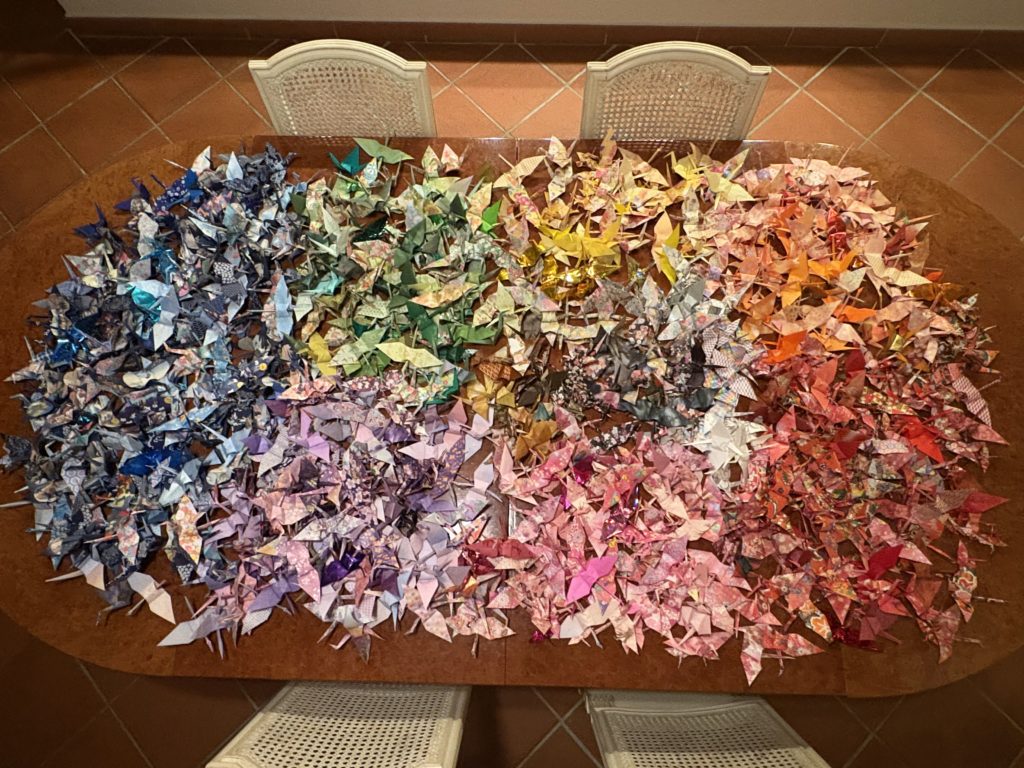
In less than a year, I’ve folded a thousand origami cranes. Legend has it that I’m entitled to one wish. I repeated it with every fold, with every crane I made, in memory of my late lover. Each one is unique (except for a pair in the middle), just as every moment is unique, and just as every shared memory is.
I’ve loved origami ever since I was a child and I’ve always thought about folding a thousand cranes someday. I just hadn’t had a good enough reason to do it. Until now.
My thousand origami cranes, or senbazuru—999 different ones and one pair—folded with love.
Folding a thousand origami cranes (senbazuru) is an ancient Japanese tradition, now known throughout the world thanks to the both tragic and poetic story of Sadako Sasaki, a little girl who developed leukemia as a result of the Hiroshima bombing.
The best-known version1 of her story goes that she tried to fold a thousand cranes during her long stays in the hospital but was only able to complete 644 before her condition worsened too much to continue. Upon her death, her classmates reportedly folded the remaining 356 cranes to honor her.
The lesser-known version of this story is the one told by his brother2, who claims that she not only managed to fold her 1,000 cranes but continued until she had folded about 1,400, transforming her wish for healing into a wish for her family’s well-being.
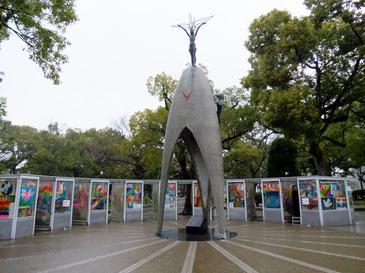
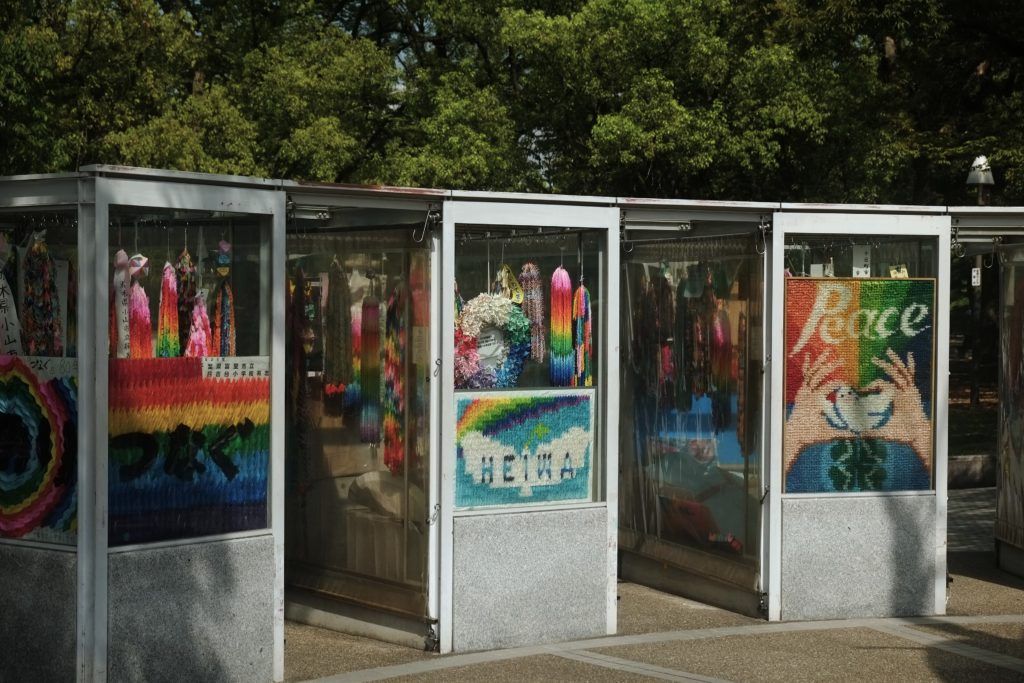
Sadako Sasaki and her thousand cranes have become a symbol of peace, complementing the crane’s traditional symbolism of longevity. In Hiroshima, the Children’s Peace Monument is a magnificent structure featuring, at its center, a wind chime topped by a statue of Sadako holding a stylized crane. All around it, display cases filled with thousands of cranes accompany her wish for peace and, more specifically, for a world without nuclear weapons.